




Choosing the correct injection needle size is essential for safe, comfortable, and effective medication delivery. Whether used in hospitals, clinics, vaccination programs, or home healthcare environments, selecting the proper needle gauge and needle length helps ensure accurate drug administration and improved patient outcomes.
As one of the most widely used medical consumables, injection needles are available in multiple specifications designed for different clinical applications. Understanding how to choose the right needle size helps healthcare professionals and medical distributors make better purchasing decisions.
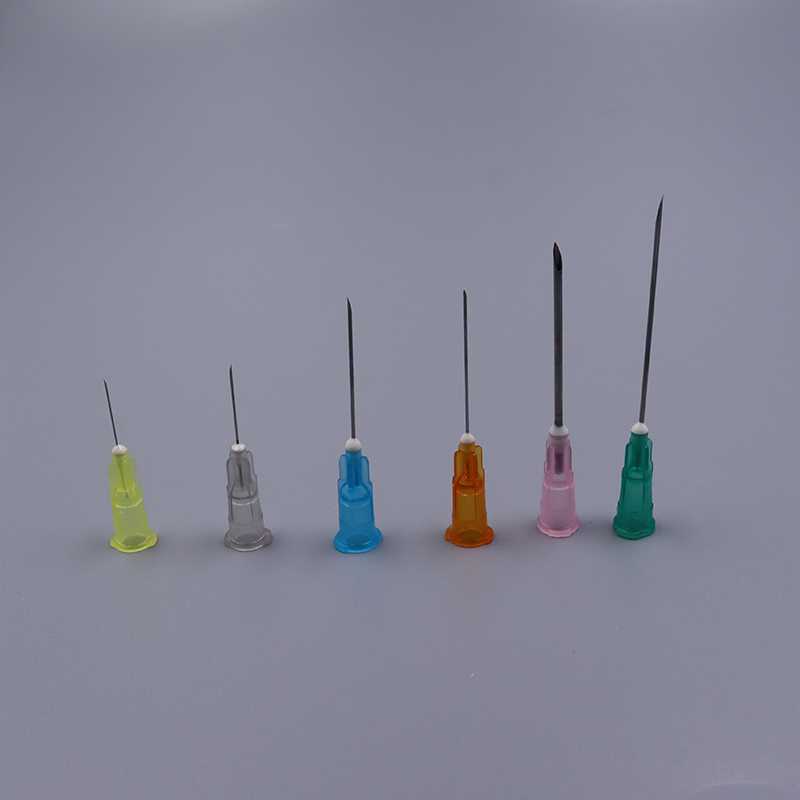
What Is Needle Gauge?
Needle gauge refers to the outer diameter (thickness) of an injection needle.
A key rule to remember:
The larger the gauge number, the smaller the needle diameter.
For example:
| Needle Gauge | Needle Thickness | Typical Use |
| 18G | Very thick | Rapid fluid transfer |
| 21G | Thick | Blood collection, injections |
| 23G | Medium | General injections |
| 25G | Thin | Subcutaneous injections |
| 27G | Very thin | Insulin injections |
Although this numbering system may appear confusing at first, it is an internationally standardized measurement widely used across the medical supply industry.
Selecting the correct needle gauge ensures a balance between medication flow efficiency and patient comfort.
Understanding Needle Length
In addition to diameter, needle length is another critical factor when choosing an injection needle.
Common needle lengths include:
- ½ inch
- ⅝ inch
- 1 inch
- 1½ inch
The correct needle length depends mainly on:
- injection method
- patient body composition
- injection site location
For example, shorter needles are typically used for subcutaneous injections, while longer needles are required for intramuscular injections to ensure medication reaches deeper muscle tissue.
Reliable manufacturers of medical consumables, such as Shanghai Teamstand, usually provide a complete range of needle length options to support global clinical requirements.
Common Needle Gauge and Needle Length Combinations
Both needle gauge and needle length must be selected together to ensure safe and effective injections. Different injection methods require different combinations.
The table below shows commonly used injection needle size combinations in clinical practice:
| Injection Type | Needle Gauge | Needle Length | Typical Application |
| Intradermal injection | 26–27G | ¼–½ inch | Tuberculosis testing, allergy testing |
| Subcutaneous injection | 25–27G | ½–⅝ inch | Insulin, heparin |
| Intramuscular (Deltoid) | 22–25G | 1 inch | Vaccines, vitamin injections |
| Intramuscular (Gluteal) | 21–23G | 1–1½ inch | Antibiotics, hormone injections |
| Intramuscular (Thigh) | 22–25G | 1 inch | Pediatric vaccines |
| Blood collection | 21–23G | 1–1½ inch | Routine venipuncture |
| Viscous medication injection | 18–21G | 1–1½ inch | Oil-based drugs |
| Pediatric injection | 24–27G | ½–1 inch | Low-volume injections |
Selecting the correct needle size depends not only on injection type but also on medication viscosity and patient condition. In clinical settings, healthcare providers adjust injection needle size accordingly to ensure safe delivery and patient comfort.
As a professional supplier of disposable medical supply products, Shanghai Teamstand offers a wide selection of injection needle specifications suitable for different clinical applications worldwide.
Key Factors to Consider When Choosing Injection Needle Size
Selecting the appropriate injection needle size involves evaluating several important factors.
1. Body Size of the Patient
Patient body composition directly affects the required needle length.
For example:
- Thin patients generally require shorter needles
- Patients with higher body fat percentages may need longer needles
- Pediatric patients usually require smaller gauge needles and shorter lengths
Using the correct needle size ensures medication reaches the intended tissue layer effectively.
Healthcare providers and distributors selecting medical consumables for clinical use typically consider these variations carefully.
2. Injection Part of the Body
Different injection sites require different needle gauge and needle length combinations.
Common examples include:
| Injection Site | Recommended Needle Size |
| Deltoid muscle | 22–25G, 1 inch |
| Gluteal muscle | 21–23G, 1–1.5 inch |
| Abdomen | 25–27G, ½ inch |
| Thigh | 22–25G, 1 inch |
Intramuscular injections usually require longer needles compared with subcutaneous injections.
Choosing the correct injection needle size improves medication absorption efficiency and reduces injection-related complications.
3. The Amount of Fluid Being Injected
Injection volume and medication viscosity also influence needle selection.
Larger injection volumes typically require:
- lower gauge number
- wider needle diameter
- improved flow rate
For example:
Thicker medications or higher-volume injections are commonly administered using 21G–23G injection needles, while insulin injections usually require 26G–30G needles.
Matching the correct needle gauge with medication characteristics ensures smoother injection performance.
Is It True That Smaller Needles Cause Less Pain?
In most situations, yes.
Smaller diameter needles (higher gauge numbers) generally cause less discomfort during injection because they create smaller puncture openings and reduce tissue disruption.
However, injection comfort also depends on several additional factors:
- injection technique
- medication viscosity
- injection speed
- patient sensitivity
- injection location
Using a needle that is too thin for thick medication may increase injection pressure and actually cause more discomfort.
Therefore, selecting the correct injection needle size is more important than simply choosing the smallest possible needle.
Why Is a 23 Gauge Needle Considered Ideal for Many Injections?
Among all available needle gauge options, the 23 gauge injection needle is widely considered one of the most versatile sizes in clinical practice.
It offers an excellent balance between comfort and injection performance.
1) Suitable for Multiple Injection Applications
A 23G injection needle is commonly used for:
- intramuscular injections
- subcutaneous injections
- vaccination procedures
- antibiotic administration
- vitamin injections
Because of its flexibility, it is one of the most frequently stocked sizes by hospitals and distributors of medical consumables.
2) Balanced Injection Comfort and Flow Rate
Compared with thinner needles such as 25G or 27G:
23G needles allow faster medication delivery.
Compared with thicker needles such as 21G:
they significantly improve patient comfort.
This balance makes the 23 gauge injection needle a preferred option in many healthcare environments.
3) Compatible With a Wide Range of Medical Applications
Another advantage of the 23G injection needle is its compatibility with medications of different viscosities.
For this reason, many procurement managers choose 23G needles as a standard inventory item when sourcing reliable medical supply products from experienced manufacturers like Shanghai Teamstand, who provide consistent quality control and flexible specification options for international markets.
Choosing the Right Injection Needle Size for Clinical Efficiency
Selecting the appropriate needle size improves:
- patient comfort
- medication delivery accuracy
- clinical workflow efficiency
- injection safety
Healthcare providers typically evaluate:
- needle gauge
- needle length
- injection site
- medication viscosity
- patient characteristics
before choosing the most suitable product.
As a professional manufacturer of disposable medical consumables, Shanghai Teamstand supplies a complete range of injection needle specifications designed to meet the needs of hospitals, distributors, and healthcare programs worldwide.
Understanding how to select the correct injection needle size helps ensure safer injections and more reliable treatment outcomes in modern clinical practice.

Author: EMMA
Marketing Manager
Hello, I'm Emma, serving as the Marketing Manager at Shanghai Teamstand Corporation. With over 10 years' experience in the medical industry. Our dedicated team is eager to offer you good service and high quality products with competitive price.
Mob: (00)86-18621901943
Email: sales@teamstandmed.com
Post time: Apr-21-2026