




For hospitals, medical distributors, and importers, choosing the right disposable syringe involves more than comparing prices. Syringe design can affect plunger movement, sealing, dosing control, material compatibility, and overall usability.
One common question for medical supply buyers is: what is the difference between 2-part and 3-part syringes?
The main difference is straightforward. A 2-part syringe consists of a barrel and plunger, while a 3-part syringe adds a separate rubber or elastomer stopper. Understanding this difference helps buyers select the right product for different applications and market requirements.
What Is the Difference Between 2-Part and 3-Part Syringes?
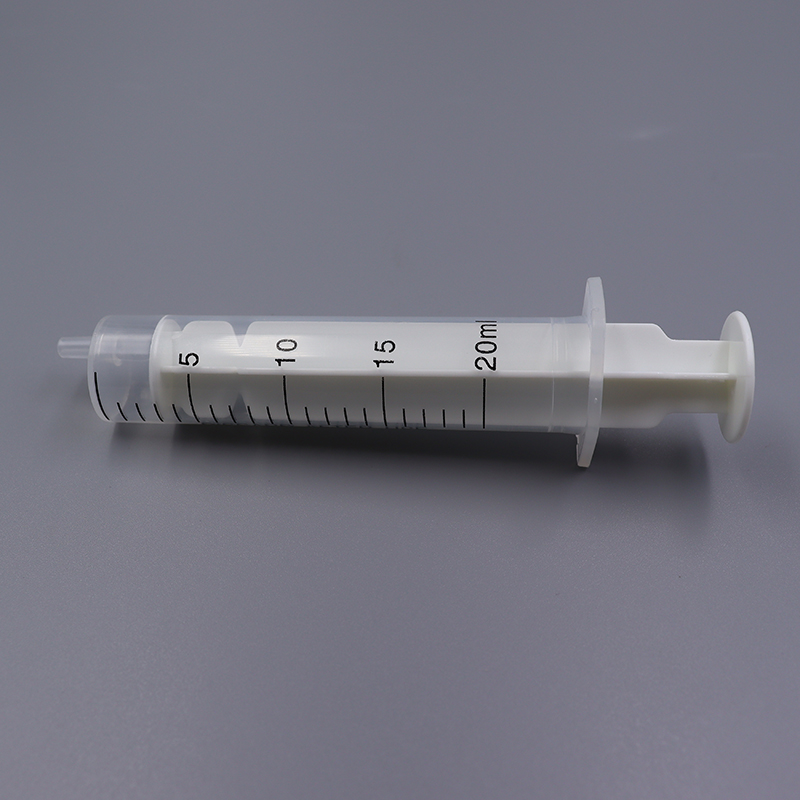
2-Part Syringe
2-part syringe, also called a 2-piece syringe, has two main components:
- Plastic barrel with graduation markings
- Plastic plunger
There is no separate rubber stopper. The end of the plastic plunger is designed to fit closely against the inner wall of the barrel.
This simpler construction can make 2-part syringes a practical option for certain cost-sensitive applications. It can also be useful where avoiding a separate elastomer component is important.
3-Part Syringe
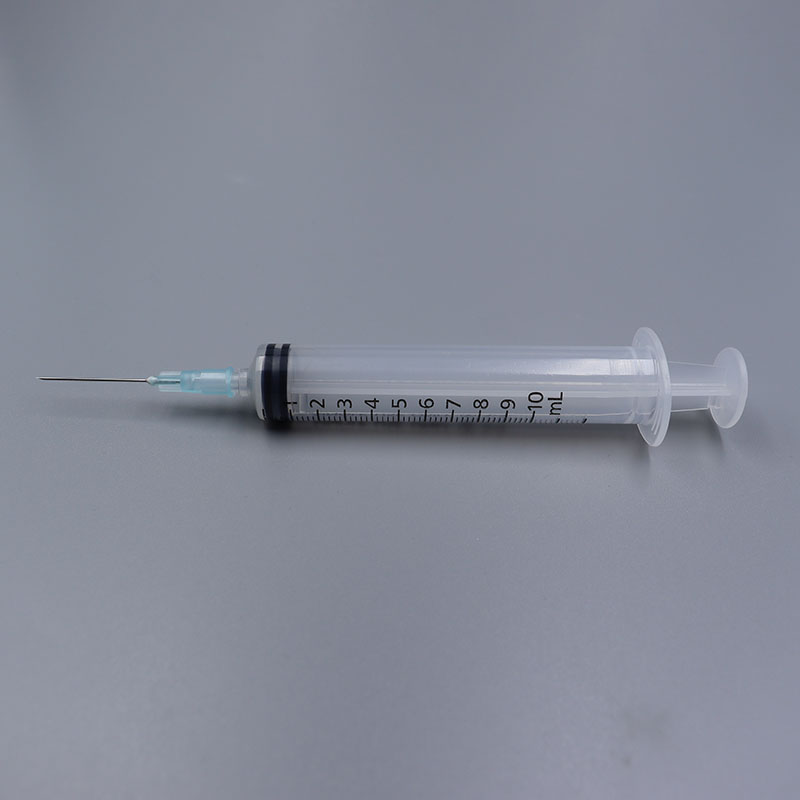
A 3-part syringe, or 3-piece syringe, consists of:
- Plastic barrel
- Plastic plunger
- Rubber stopper
The stopper is attached to the end of the plunger and forms a flexible seal against the barrel wall.
This design generally provides smoother plunger movement and consistent sealing, which is why 3-part disposable syringes are widely used in hospitals, clinics, and other healthcare settings.
2-Part vs. 3-Part Syringes: Key Differences
| Feature | 2-Part Syringe | 3-Part Syringe |
| Construction | Barrel + plastic plunger | Barrel + plunger + stopper |
| Sealing | Plastic-to-plastic fit | Elastomer stopper |
| Plunger movement | Generally firmer | Generally smoother |
| Material considerations | No separate stopper | Stopper material needs evaluation |
| Cost | Usually lower | Usually slightly higher |
| Common use | Specific and cost-sensitive applications | General medical applications |
| Configuration options | Varies by supplier | Wide range of sizes and connections |
Neither design is automatically suitable for every application. The right choice depends on the intended use, medication or solution, equipment, local regulations, and customer requirements.
Why Are 3-Part Syringes Widely Used?
The 3-part design is common in medical supply chains because it combines a flexible seal with smooth plunger movement.
1. Smooth Plunger Movement
The elastomer stopper helps the plunger move smoothly through the barrel. This allows healthcare professionals to control injection and aspiration more easily.
Smooth movement can be particularly useful when accurate handling is important, including applications involving smaller volumes.
2. Reliable Sealing
The stopper provides a flexible contact surface between the plunger and barrel. This helps maintain the seal during normal aspiration and injection.
For a medical syringe manufacturer, consistent barrel dimensions, stopper quality, and assembly are important factors in achieving stable product performance.
3. More Configuration Options
3-part syringes are available in many configurations, making them suitable for different procurement programs.
Depending on the supplier, options may include:
- Luer Lock or Luer Slip
- Centered or eccentric tip
- With or without needle
- Different needle gauges and lengths
- Multiple syringe capacities
- Individual sterile packaging
When Should You Choose a 2-Part or 3-Part Syringe?
The choice should start with the actual application rather than simply the number of components.
Choose a 2-Part Syringe When:
A 2-part syringe may be suitable when:
- Unit cost is a major purchasing consideration
- A simple plastic construction is preferred
- The application does not require particularly smooth plunger movement
- Material compatibility needs to be considered without an elastomer stopper
- Your market specifically uses or requests 2-part syringes
For distributors serving price-sensitive markets, 2-part syringes can provide an additional option within the product range.
Choose a 3-Part Syringe When:
A 3-part syringe may be considered for:
- General injection and aspiration
- Hospital and clinic supply
- Routine medication administration
- Applications where smooth plunger movement is important
- Medical distribution programs requiring multiple sizes
- OEM and private-label projects
For many medical syringe suppliers, 3-part syringes are therefore a core product category.
Syringe Selection by Application
Different customers may have different requirements. A simple application-based comparison can help procurement teams narrow down their options.
| Application | Key Considerations | Possible Choice |
| General injection | Smooth movement, clear graduation, suitable needle | 3-part |
| Cost-sensitive supply | Unit price and basic requirements | 2-part or 3-part |
| Hospital procurement | Performance, consistency, certification, packaging | 3-part |
| OEM/private label | Custom specifications and packaging | 3-part |
| Special material requirements | Medication and material compatibility | Depends on application |
| Syringe pump | Pump compatibility and approved specifications | Follow equipment requirements |
For syringe pump applications, buyers should always check the equipment manufacturer's approved syringe specifications rather than assuming that every 3-part syringe is compatible.
What to Check When Buying Disposable Syringes in Bulk?
After choosing the basic syringe design, procurement teams should also confirm the following specifications.
1. Capacity
Common sizes include 1 mL, 3 mL, 5 mL, 10 mL, 20 mL, 30 mL, and 50/60 mL.
The required sizes should be based on customer demand and intended applications to avoid unnecessary inventory.
2. Luer Connection
Check whether your customers require Luer Lock or Luer Slip.
Luer Lock uses a threaded connection and is designed to provide a more secure attachment, while Luer Slip uses a push-fit connection.
3. Needle Configuration
Syringes can be supplied with a pre-attached needle, separately packaged needle, or without a needle.
Needle gauge and length should also be specified according to the intended application.
4. Graduation and Accuracy
Clear and readable graduation markings are essential for dose measurement. Buyers should confirm the graduation scale and applicable accuracy requirements before placing a large order.
5. Packaging and Sterilization
For disposable medical syringes, packaging should protect the product during storage and transportation.
Individual sterile packaging, such as blister packs or peelable pouches, may be available depending on the product and market.
6. Certifications
Importers should confirm the documentation required in their destination market. Depending on the product and region, this may include ISO 13485, CE marking, FDA-related requirements, sterilization records, material information, and product testing documents.
Bulk Syringe Procurement Checklist
Before placing an order, buyers can use the following checklist:
| Procurement Item | What to Confirm |
| Syringe type | 2-part or 3-part |
| Capacity | Required sizes and quantities |
| Tip | Luer Lock or Luer Slip |
| Needle | Gauge, length and attachment |
| Graduation | Scale and readability |
| Packaging | Individual and bulk packaging |
| Sterilization | Method and relevant documentation |
| Certification | Requirements for the target market |
| OEM | Private label, packaging and specifications |
| Order volume | MOQ, lead time and production capacity |
This approach helps distributors compare suppliers based on the complete product specification rather than unit price alone.
Sourcing 2-Part and 3-Part Syringes from a Medical Syringe Manufacturer
Working directly with an experienced medical syringe manufacturer can simplify bulk purchasing, especially for importers and distributors managing multiple syringe specifications.
Shanghai Teamstand Corporation supplies disposable medical syringes in different sizes and configurations, with a strong focus on 3-part syringe products.
Available options include:
- 1 mL, 3 mL, 5 mL, 10 mL, 20 mL, 30 mL and 50/60 mL syringes
- Luer Lock and Luer Slip configurations
- Centered and eccentric tips
- With or without needles
- Different needle specifications
- Sterile individual packaging
- OEM and private-label solutions
Teamstand also supplies a broad range of medical consumables, allowing distributors to combine syringes with other products in a wider sourcing program.
Before ordering, buyers should confirm the exact specifications, certificates, packaging requirements, and regulations applicable to their target market.
Final Considerations
The choice between a 2-part and 3-part syringe depends on the application, required performance, material compatibility, budget, and market requirements.
A 2-part syringe offers a simpler construction and can be suitable for certain cost-sensitive or application-specific needs. A 3-part syringe adds an rubber stopper and generally provides smoother plunger movement and reliable sealing, making it widely used for routine medical applications.
For medical distributors and procurement teams, factors such as syringe capacity, tip type, needle configuration, graduation, packaging, certification, and total purchasing cost should all be considered before placing a bulk order.
Looking for bulk disposable syringes? Contact Shanghai Teamstand Corporation for product specifications, samples, OEM/private-label options, and a quotation based on your required volume and market.
A 2-part syringe has two components, while a 3-part syringe includes a separate rubber gasket for smoother plunger movement.
The choice depends on application, target market, required performance, and overall procurement cost.
Yes, 2-part syringes can offer a simpler and more economical option for many high-volume applications.
Yes, the rubber gasket generally provides smoother and more controlled plunger movement.
Yes, manufacturers can offer different capacities, needle sizes, tips, and packaging options according to buyer requirements.
Buyers should compare application, material, accuracy, sterility, certifications, price, packaging, and supplier reliability.
WANT TO WORK WITH US?

Author: EMMA
Marketing Manager
Hello, I'm Emma, serving as the Marketing Manager at Shanghai Teamstand Corporation. With over 10 years' experience in the medical industry. Our dedicated team is eager to offer you good service and high quality products with competitive price.
Mob: (00)86-18621901943
Email: sales@teamstandmed.com
Post time: Sep-28-2026