




Blood collection is one of the most common medical procedures performed in hospitals, laboratories, and clinics. Choosing the right blood collection device can improve sample quality, patient comfort, and clinical efficiency. Among the most widely used options, the straight needle remains a standard tool for routine venipuncture.
This article explains what a straight needle is, common needle sizes, the pros and cons of straight needles, and whether a straight needle is better than a butterfly needle. We will also discuss how healthcare providers and distributors choose reliable medical consumables for blood collection procedures.
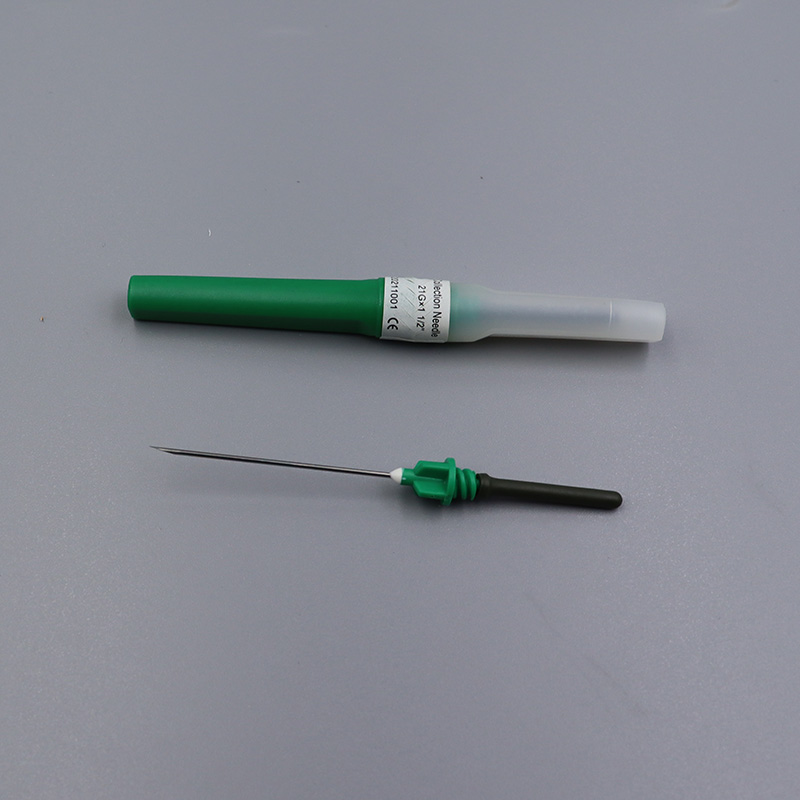
What Is a Straight Needle for Blood Draw?
A straight needle is a blood collection device designed for venous blood sampling. It is commonly connected to a vacuum blood collection holder or syringe and used to draw blood directly from the vein.
Straight needles are widely used in:
- Hospitals
- Diagnostic laboratories
- Blood banks
- Clinics
- Healthcare centers
Most straight needles are made of stainless steel and intended for single use to ensure safety and hygiene. Compared with a butterfly needle, a straight needle has a simpler and more rigid structure without flexible tubing.
Because of its fast blood flow and affordable cost, the straight needle remains one of the most popular medical consumables in routine blood collection.
Components of a Straight Needle
A standard straight needle usually contains:
| Component | Function |
| Needle Cannula | Penetrates the vein |
| Needle Hub | Connects to the holder |
| Rubber Sleeve | Prevents blood leakage |
| Protective Cap | Maintains sterility |
Many straight needles are double-ended needles. One side enters the patient’s vein, while the other side punctures the vacuum collection tube.
Needle Sizes of Straight Needle
Selecting the correct needle size is important for safe and efficient blood collection.
Common Straight Needle Sizes
| Gauge | Common Use |
| 18G | Blood donation |
| 20G | High-volume blood draw |
| 21G | Routine adult blood collection |
| 22G | Smaller veins |
| 23G | Pediatric or fragile veins |
Understanding Needle Gauge
Needle gauge refers to the diameter of the needle:
- Smaller gauge number = larger needle
- Larger gauge number = smaller needle
For example, a 21G straight needle is larger than a 23G needle and allows faster blood flow.
The 21G straight needle is the most commonly used size because it balances patient comfort and collection efficiency.
Pros of Straight Needle
The straight needle is still preferred in many healthcare settings because of several important advantages.
1. Fast Blood Collection
Straight needles provide stable and rapid blood flow, making them suitable for routine venipuncture and laboratory testing.
2. Cost-Effective
Compared with a butterfly needle, a straight needle is usually less expensive. This makes it ideal for hospitals and distributors purchasing medical supplies in large quantities.
3. Simple Structure
The design is straightforward and easy for trained healthcare professionals to use.
4. Reduced Blood Waste
Straight needles typically have less dead space than butterfly needles, helping reduce blood loss during collection.
5. Widely Available
Straight needles are common medical devices found in most healthcare facilities worldwide.
Cons of Straight Needle
Although straight needles are widely used, they also have some disadvantages.
1. Less Suitable for Difficult Veins
Straight needles work best in healthy and visible veins. They may be difficult to use in patients with:
- Fragile veins
- Rolling veins
- Small veins
- Pediatric veins
2. Lower Flexibility
Unlike a butterfly needle, the straight needle does not include flexible tubing, which can make positioning less comfortable in some cases.
3. Requires Skilled Technique
Proper venipuncture technique is important to avoid vein injury or patient discomfort.
Is a Straight Needle Better Than a Butterfly Needle?
Both devices are important in modern healthcare, but each has different advantages.
Straight Needle vs Butterfly Needle
| Feature | Straight Needle | Butterfly Needle |
| Blood Flow | Faster | Slightly slower |
| Cost | Lower | Higher |
| Best for Large Veins | Excellent | Good |
| Best for Small Veins | Limited | Excellent |
| Ease of Handling | Moderate | Easier |
| Patient Comfort | Standard | Better for sensitive veins |
When to Use a Straight Needle
A straight needle is often preferred for:
- Routine adult blood draw
- High-volume blood collection
- Laboratory testing
- Patients with healthy veins
When to Use a Butterfly Needle
A butterfly needle is often better for:
- Elderly patients
- Pediatric patients
- Difficult veins
- Fragile veins
Healthcare professionals usually select the blood collection device based on the patient’s vein condition and the required procedure.
Safety Considerations for Blood Collection
As with all medical devices, proper safety procedures are essential when using straight needles or butterfly needles.
Healthcare workers should:
- Use sterile single-use products
- Dispose of needles safely
- Wear protective gloves
- Follow infection control procedures
- Avoid needle reuse
Many modern blood collection devices also include safety-engineered features to reduce accidental needlestick injuries.
Choosing a Reliable Medical Consumables Supplier
For hospitals, laboratories, and distributors, product quality and regulatory compliance are important when selecting medical supplies.
Shanghai Teamstand Corporation provides a wide range of medical consumables and blood collection devices, including straight needles, butterfly needles, syringes, and other disposable medical supplies for international healthcare markets.
The company focuses on supplying reliable medical devices that meet global quality standards while supporting hospitals and distributors with stable supply solutions.
For more information, visit Shanghai Teamstand Corporation
Conclusion
The straight needle remains one of the most commonly used blood collection devices in modern healthcare. Its fast blood flow, simple structure, and affordable pricing make it ideal for routine blood draw procedures.
However, the butterfly needle may provide better comfort and control for patients with difficult veins. Understanding the differences between these two medical devices helps healthcare professionals select the right option for each clinical situation.
As demand for reliable medical supplies and medical consumables continues to grow worldwide, choosing high-quality blood collection products from trusted suppliers is increasingly important.
A straight needle is mainly used for routine venous blood collection.
The 21G straight needle is the most commonly used size for adult blood draw.
It depends on the patient’s vein condition and the clinical application.
Yes, straight needles are generally more cost-effective.
They can be used, but butterfly needles are usually preferred for pediatric patients.
WANT TO WORK WITH US?

Author: EMMA
Marketing Manager
Hello, I'm Emma, serving as the Marketing Manager at Shanghai Teamstand Corporation. With over 10 years' experience in the medical industry. Our dedicated team is eager to offer you good service and high quality products with competitive price.
Mob: (00)86-18621901943
Email: sales@teamstandmed.com
Post time: May-11-2026