




In modern healthcare environments, IV sets play a critical role in delivering fluids, medications, and nutrients safely into the bloodstream. As one of the most essential medical consumables used across hospitals, clinics, emergency centers, and home-care settings, selecting the right IV infusion set directly impacts treatment efficiency and patient safety.
Understanding IV set types, structures, uses, maintenance requirements, and compatibility considerations helps healthcare providers and procurement professionals choose the most appropriate solution for their clinical needs.
This guide explains everything you need to know about IV sets, including their components, applications, pricing considerations, and how to select reliable suppliers.
What Are IV Sets?
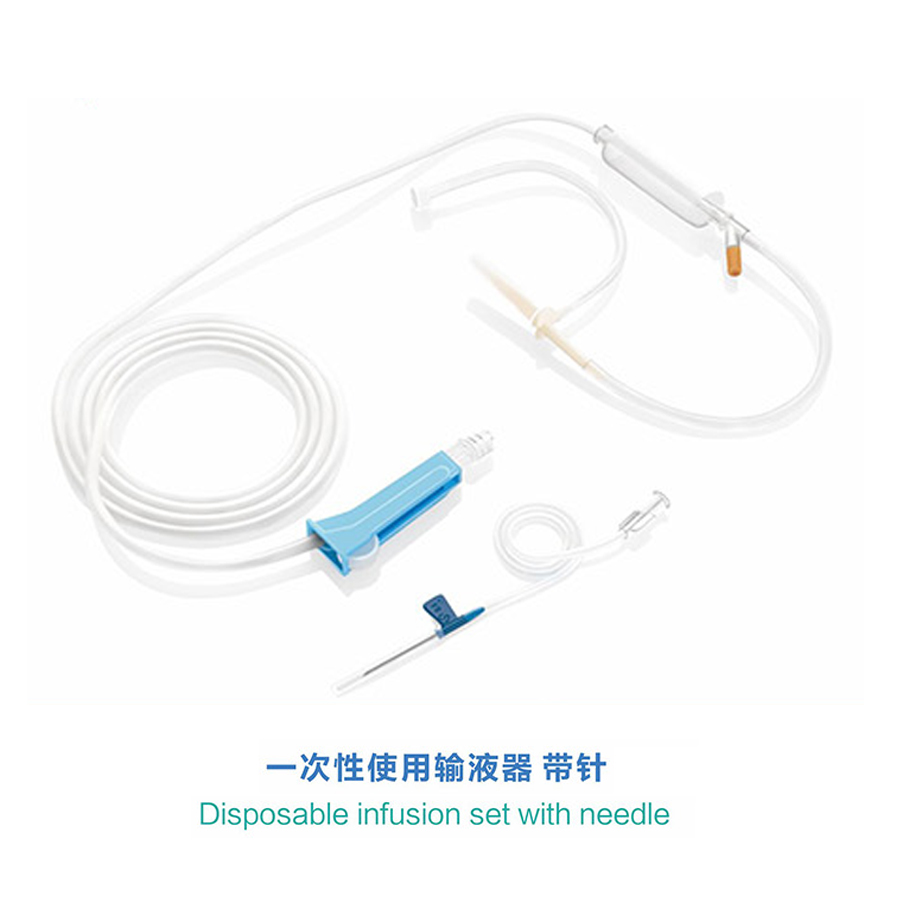
IV sets, also known as IV infusion sets, are sterile disposable medical devices designed to deliver fluids or medications directly into a patient’s vein through an intravenous access point.
They are widely used for:
Hydration therapy
Medication delivery
Blood transfusion
Nutritional infusion
Emergency treatment support
Because they ensure controlled fluid administration, IV sets remain one of the most frequently used medical supply products in global healthcare systems.
Main Parts of an IV Set
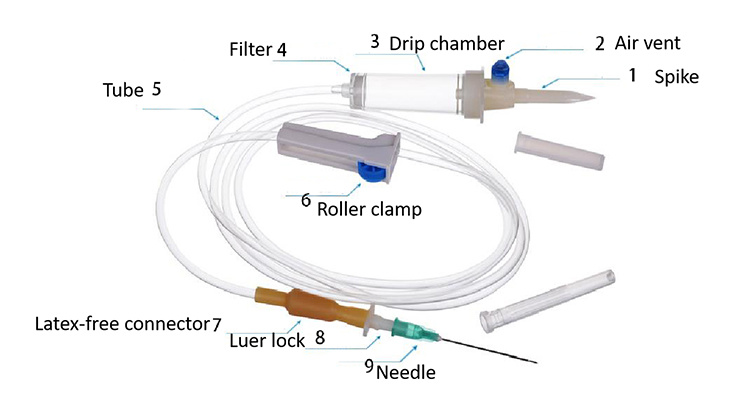
Although IV set types vary depending on their intended application, most standard IV infusion sets include several essential components.
1. Spike
The spike connects the IV set to the infusion container, such as a fluid bag or bottle. It allows sterile fluid transfer into the tubing system.
2. Drip Chamber
The drip chamber enables medical professionals to monitor the flow rate visually and helps prevent air bubbles from entering the tubing.
Common drip factors include:
10 drops/mL (macrodrip)
15 drops/mL
20 drops/mL
60 drops/mL (microdrip)
Each option supports different infusion accuracy requirements.
3. Tubing
Medical-grade PVC tubing transports fluids from the container to the patient. Tubing length and flexibility vary depending on clinical application.
4. Flow Regulator (Roller Clamp)
The roller clamp controls infusion speed manually, ensuring accurate dosage delivery.
5. Injection Port (Y-site)
The injection port allows additional medications to be administered during infusion without replacing the entire IV set.
6. Connector (Luer Lock or Luer Slip)
The connector attaches securely to IV cannulas, needles, or extension lines.
7. Air Vent (Optional)
Some IV sets include an air vent to support fluid flow when using rigid infusion bottles.
IV Set Types
Different clinical scenarios require different IV set types. Selecting the correct configuration improves treatment safety and workflow efficiency.
1. Gravity IV Infusion Set
Gravity IV infusion sets rely on height difference to create flow pressure.
Typical uses include:
General hydration therapy
Routine medication infusion
Hospital ward treatments
They are widely used because of their simplicity and affordability.
2. Vented IV Set
A vented IV infusion set allows air to enter rigid containers such as glass bottles.
Common applications:
Bottle-based infusion systems
Emergency fluid replacement
Operating room settings
3. Non-Vented IV Set
Non-vented IV sets are designed for soft IV bags that collapse during infusion.
They are commonly used in:
Standard hospital infusion therapy
Outpatient clinics
Home healthcare settings
4. Filter IV Set
Filter IV sets contain integrated filters that prevent particles from entering the bloodstream.
Typical filter sizes:
0.22 micron (bacteria filtration)
1.2 micron (lipid filtration)
These IV set types improve patient safety during sensitive drug administration.
Table 1. Comparison of Common IV Set Types and Their Uses
| IV Set Type | Main Feature | Typical Uses | Container Compatibility |
| Gravity IV Set | Uses gravity for fluid flow control | Routine hydration, medication infusion | IV bags |
| Vented IV Set | Includes air vent for airflow | Glass bottles and rigid containers | Bottles |
| Non-Vented IV Set | Designed for collapsible fluid bags | Standard hospital infusion therapy | IV bags |
| Filter IV Set | Built-in particle filtration | Chemotherapy, lipid infusion, antibiotics | Bags & bottles |
IV Set Uses in Clinical Practice
The versatility of IV set uses makes them essential across nearly all healthcare environments.
Common applications include:
Fluid Therapy
Maintaining hydration levels during surgery or illness.
Medication Administration
Delivering antibiotics, anesthetics, and chemotherapy drugs.
Blood Transfusion
Specialized IV sets ensure safe blood component delivery.
Nutritional Support
Providing parenteral nutrition to patients unable to eat normally.
Emergency Medicine
Rapid-response infusion systems support trauma and ICU patients.
These applications demonstrate why IV sets remain indispensable medical consumables in hospitals worldwide.
Maintenance and Storage of IV Sets
Although most IV infusion sets are single-use disposable products, proper storage and handling are essential to maintain sterility and performance quality.
Recommended practices include:
Store in dry environments
Avoid direct sunlight exposure
Keep packaging sealed before use
Follow expiration date instructions
Use only sterile unopened units
Healthcare facilities should also implement inventory rotation systems to ensure older stock is used first.
Reliable manufacturers of medical supply products typically provide clear storage guidelines on packaging labels.
Compatibility Considerations When Choosing IV Sets
Selecting the correct IV set requires evaluating compatibility with infusion equipment and therapy requirements.
Important compatibility factors include:
Infusion Container Type
Choose vented sets for bottles and non-vented sets for soft IV bags.
Flow Rate Requirements
Macrodrip sets support rapid infusion
Microdrip sets support precise pediatric dosing
Medication Type
Some medications require filtered IV sets.
Connector Standards
Ensure compatibility with:
IV cannulas
extension tubing
infusion pumps
Using incompatible devices may reduce infusion accuracy or compromise patient safety.
Table 2. IV Set Selection Guide Based on Clinical Requirements
| Selection Factor | Recommended IV Set Type | Clinical Benefit |
| Glass infusion bottle | Vented IV set | Maintains smooth fluid flow |
| Soft IV fluid bag | Non-vented IV set | Prevents air entry risk |
| Pediatric infusion | Microdrip IV set | Precise dosage control |
| High-precision medication | Filter IV set | Removes particles and bacteria |
| Fragile veins or short procedures | Butterfly IV set | Improves insertion accuracy |
Pricing Factors of IV Sets in Global Markets
Pricing of IV infusion sets varies depending on materials, specifications, and regulatory certifications.
Key factors affecting cost include:
Sterility standards
Tubing material quality
Filter integration
Connector type
Packaging method
OEM customization support
Hospitals and distributors purchasing medical consumables in bulk often receive more competitive pricing from manufacturers.
For international buyers sourcing directly from China, working with experienced suppliers improves cost efficiency while maintaining product compliance.
Choosing a Reliable IV Set Manufacturer
Selecting a trusted supplier ensures consistent product quality and regulatory compliance.
Professional manufacturers typically provide:
ISO-certified production systems
CE and international certifications
OEM/ODM customization services
Stable export logistics support
Bulk procurement solutions
Shanghai Teamstand Corporation, for example, is an experienced global provider of medical supply and disposable medical consumables, offering a wide range of IV infusion products designed for hospitals, distributors, and procurement organizations worldwide. With strong quality control standards and international market experience, the company supports healthcare providers with reliable IV set solutions tailored to clinical needs.
Conclusion
As essential components of modern intravenous therapy systems, IV sets play a vital role in safe and efficient patient care. Understanding IV set parts, IV set types, and common IV set uses helps healthcare professionals and procurement specialists choose the most suitable products for their clinical environments.
By considering compatibility, maintenance practices, and pricing structures, organizations can optimize their purchasing strategies and ensure reliable supply of high-quality IV infusion set products.
Partnering with experienced manufacturers such as Shanghai Teamstand Corporation further strengthens procurement efficiency while maintaining international healthcare standards.
Post time: Apr-13-2026