




Effective diabetes management depends heavily on accurate and comfortable insulin administration. Choosing the right insulin syringe or insulin pen is not just a clinical decision—it directly impacts patient compliance, dosing accuracy, and overall treatment outcomes.
In this guide, we'll walk through everything you need to know when selecting the best insulin delivery option, including syringe types, needle sizes, and key comparisons.
What Is an Insulin Syringe?
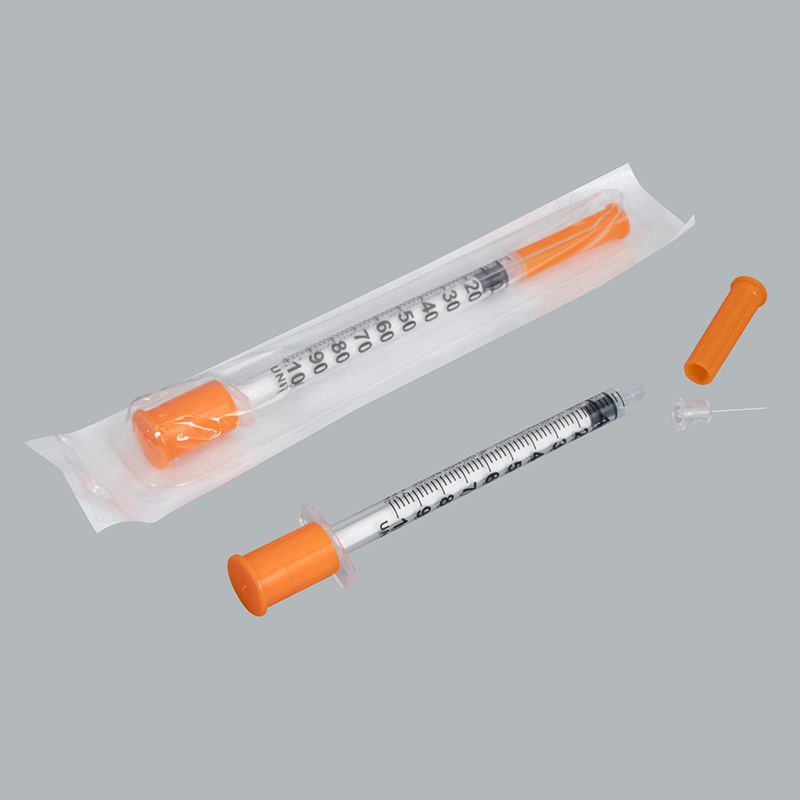
An insulin syringe is a specialized medical device designed to deliver insulin into the body through subcutaneous injection. Unlike standard syringes, insulin syringes are calibrated in insulin units (rather than milliliters), ensuring precise dosing.
Key Components of an Insulin Syringe:
Barrel – Marked with insulin units for accurate measurement
Plunger – Pushes insulin out of the syringe
Insulin syringe needle – A fine, short needle for subcutaneous injection
Insulin syringes are widely used due to their affordability, simplicity, and reliability, making them a popular choice in both clinical and home-care settings.
How and Where to Inject Insulin?
Insulin is typically injected into the subcutaneous tissue, the layer of fat just beneath the skin. Proper injection technique ensures consistent absorption.
Common Injection Sites:
Abdomen (most recommended for consistent absorption)
Thighs
Upper arms
Buttocks
Best Practices:
Rotate injection sites to avoid tissue damage
Avoid injecting into scar tissue or bruised areas
Maintain a 90° angle for shorter needles (4–6 mm)
Proper technique is just as important as selecting the right insulin syringe needle.
Which Insulin Syringe Size Should You Use?
Insulin syringes come in different capacities depending on the required dosage. Choosing the right size improves dosing accuracy and reduces waste.
Common Insulin Syringe Sizes:
| Syringe Capacity | Suitable Dose Range | Best For |
| 0.3 mL (30 units) | Up to 30 units | Low-dose users |
| 0.5 mL (50 units) | 30–50 units | Moderate dosing |
| 1 mL (100 units) | 50–100 units | High-dose users |
Tip: Always select the smallest syringe that can accommodate your dose. This allows for more precise measurement.
Which Insulin Syringe Needle Size Should You Use?
Selecting the right insulin syringe needle involves two key factors: needle length and needle gauge.
1. Needle Length (Recommended: 4 mm – 6 mm)
Shorter needles are now widely recommended for insulin delivery because they:
Reduce pain
Minimize risk of intramuscular injection
Improve patient comfort
Recommended range:
4 mm to 6 mm for most patients
These lengths are suitable for both adults and children, regardless of body type.
2. Needle Gauge (Recommended: 29G – 31G)
Needle gauge refers to thickness.
Important rule: The higher the gauge number, the thinner the needle.
Selection Tips:
Lean patients: 31G preferred for comfort
Heavier patients: 29G–30G may provide better flow
Viscous insulin: Lower gauge (thicker needle) improves delivery
| Needle Gauge (Recommended: 29G – 31G) | ||
| Gauge | Thickness | Typical Use |
| 29G | Slightly thicker | Faster flow, higher viscosity insulin |
| 30G | Medium | Balanced option |
| 31G | Ultra-thin | Maximum comfort, minimal pain |
Types of Insulin Syringe: Which One Is Suitable for You?
There are several insulin syringe types available, each designed for specific insulin concentrations and user needs.
Main Types:
U40 insulin syringe
U100 insulin syringe
These classifications are based on insulin concentration.
U40 vs U100 Insulin Syringe
Understanding the difference between U40 insulin syringe and U100 insulin syringe is critical to avoid dosing errors.
Key Takeaway:
Always match the syringe with the insulin type
Never use U40 insulin with a U100 syringe (or vice versa)
Incorrect pairing can lead to serious dosing errors.
| Feature | U40 Insulin Syringe | U100 Insulin Syringe |
| Insulin Concentration | 40 units/mL | 100 units/mL |
| Calibration | Marked for U40 insulin | Marked for U100 insulin |
| Common Regions | Some developing markets | Global standard |
| Risk | Misuse can cause underdose/overdose | Safer when matched correctly |
Insulin Pen vs Insulin Syringe
Patients today often choose between an insulin pen and a traditional insulin syringe. Each option has its own advantages.
Comparison Table:
| Feature | Insulin Syringe | Insulin Pen |
| Cost | Lower | Higher |
| Ease of Use | Requires manual drawing | Pre-filled, easy to use |
| Portability | Moderate | Highly portable |
| Accuracy | High (with proper use) | Very high |
| Training Required | Yes | Minimal |
When to Choose Each:
Choose an insulin syringe if:
Cost is a concern
Bulk purchasing for healthcare facilities
Flexible dosing is required
Choose an insulin pen if:
Convenience is a priority
Patient has limited dexterity or vision issues
Frequent injections are needed
Additional Factors to Consider
Beyond size and type, several practical factors influence your choice:
1. Patient Comfort
Ultra-fine needles (30G–31G) and shorter lengths improve adherence.
2. Dosage Accuracy
Clear markings and appropriate syringe size help avoid dosing mistakes.
3. Safety and Hygiene
Single-use, sterile medical consumables reduce infection risks.
4. Supply and Cost Efficiency
For distributors and healthcare providers, reliable sourcing and consistent quality are essential.
Manufacturers like Shanghai Teamstand offer a wide range of insulin syringes designed for international standards, combining precision, safety, and cost-effectiveness—making them suitable for bulk procurement and export markets.
Conclusion
Selecting the right insulin syringe involves more than just picking a needle—it requires careful consideration of dosage, needle size, insulin concentration, and patient comfort.
Key Points to Remember:
Choose the correct syringe size based on dosage
Use 4–6 mm needle length for optimal comfort
Select 29G–31G needle gauge depending on patient needs
Always match U40 or U100 insulin syringe with the correct insulin
Consider insulin pen alternatives for convenience
By making informed choices, healthcare providers and patients can significantly improve insulin therapy outcomes.
Most guidelines recommend 4 mm to 6 mm needle length and 31G gauge for minimal pain and effective delivery.
No. Using the wrong syringe type can lead to serious dosing errors. Always match the syringe with the insulin concentration.
It depends. Insulin pens offer convenience and ease of use, while insulin syringes are more cost-effective and widely used in medical supply chains.
Insulin syringes are designed for single use only to ensure safety and prevent infection.
You can make the payment to our bank account, Western Union or PayPal:
30% deposit in advance, 70% balance against the copy of B/L.
Yes, we always use high quality export packaging. We also use specialized hazard packing for dangerous goods and validated cold storage shippers for temperature sensitive items. Specialist packaging and non-standard packing requirements may incur an additional charge.
The shipping cost depends on the way you choose to get the goods. Express is normally the most quickest but also most expensive way. By seafreight is the best solution for big amounts. Exactly freight rates we can only give you if we know the details of amount, weight and way. Please contact us for further information.
WANT TO WORK WITH US?

Author: EMMA
Marketing Manager
Hello, I'm Emma, serving as the Marketing Manager at Shanghai Teamstand Corporation. With over 10 years' experience in the medical industry. Our dedicated team is eager to offer you good service and high quality products with competitive price.
Mob: (00)86-18621901943
Email: sales@teamstandmed.com
Post time: Apr-28-2026