




Choosing the right insulin pen needle is essential for ensuring safe, comfortable, and accurate insulin delivery. With multiple insulin pen needle sizes, lengths, and gauges available on the market today, selecting the appropriate option can significantly improve injection outcomes and patient adherence.
Whether you are a healthcare provider, distributor, or procurement specialist sourcing medical consumables, understanding how to choose the correct disposable insulin pen needle helps ensure reliable diabetes management and safer clinical practice.
This article explains insulin pen needle structure, available types, size differences, selection strategies, and safety recommendations.
What Are Insulin Pen Needles?
An insulin pen needle is a sterile, single-use needle designed to attach to an insulin pen injector for subcutaneous insulin administration. Compared with traditional syringes, insulin pen needles provide improved convenience, dosing accuracy, and patient comfort.
Today, insulin pen needles are widely used in:
hospitals
outpatient clinics
pharmacies
home-care environments
As an essential medical device, they support safe insulin therapy for millions of patients worldwide.
Most modern disposable insulin pen needles are designed for universal compatibility with major insulin pen systems, making them suitable for global medical supply distribution.
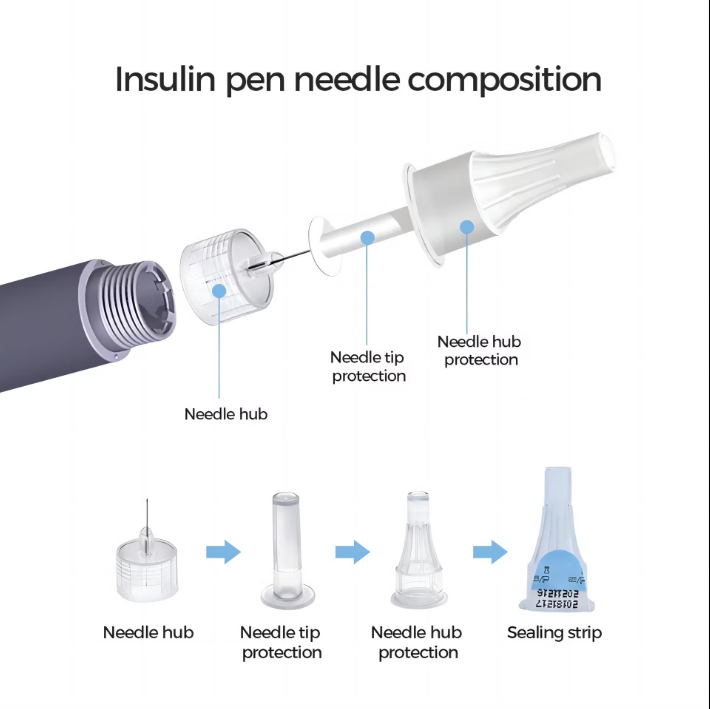
Components of Insulin Pen Needles
A standard insulin pen needle consists of several carefully engineered components that ensure safe and accurate insulin delivery.
Types of Insulin Pen Needles
Several types of insulin pen needle products are available depending on clinical environment and safety requirements.
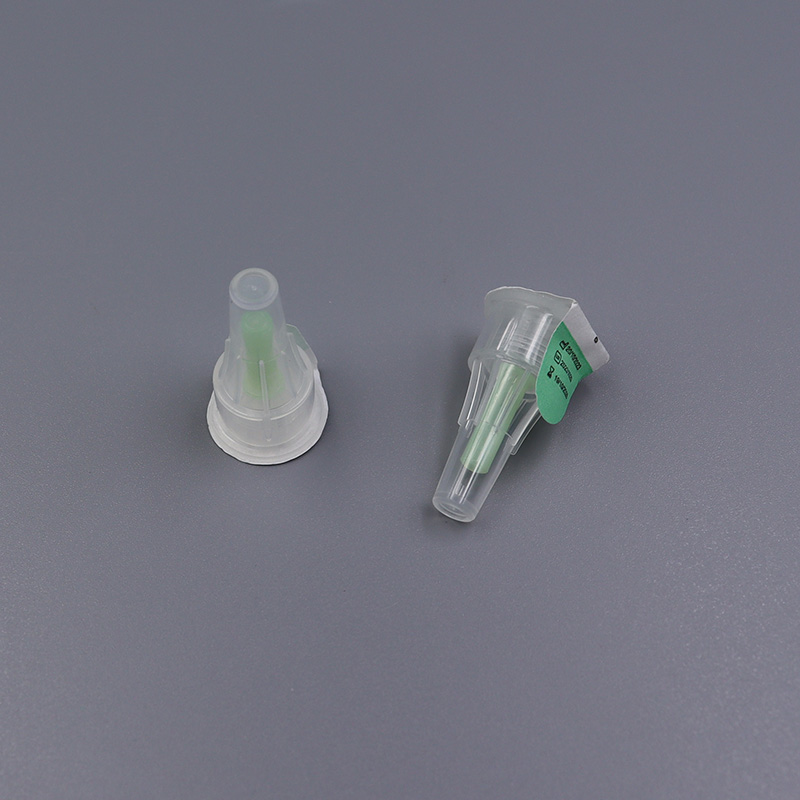
Disposable Insulin Pen Needle
The most widely used type globally.
Key advantages:
sterile single-use design
universal compatibility
reduced infection risk
cost-effective for bulk purchasing
Disposable versions dominate the global insulin injection medical consumables market.
Safety Insulin Pen Needle
A safety insulin pen needle includes protective shielding technology to reduce accidental needlestick injuries.
These are commonly used in:
hospitals
nursing homes
outpatient treatment centers
long-term care facilities
Safety models improve workplace protection and support sharps-injury prevention compliance.
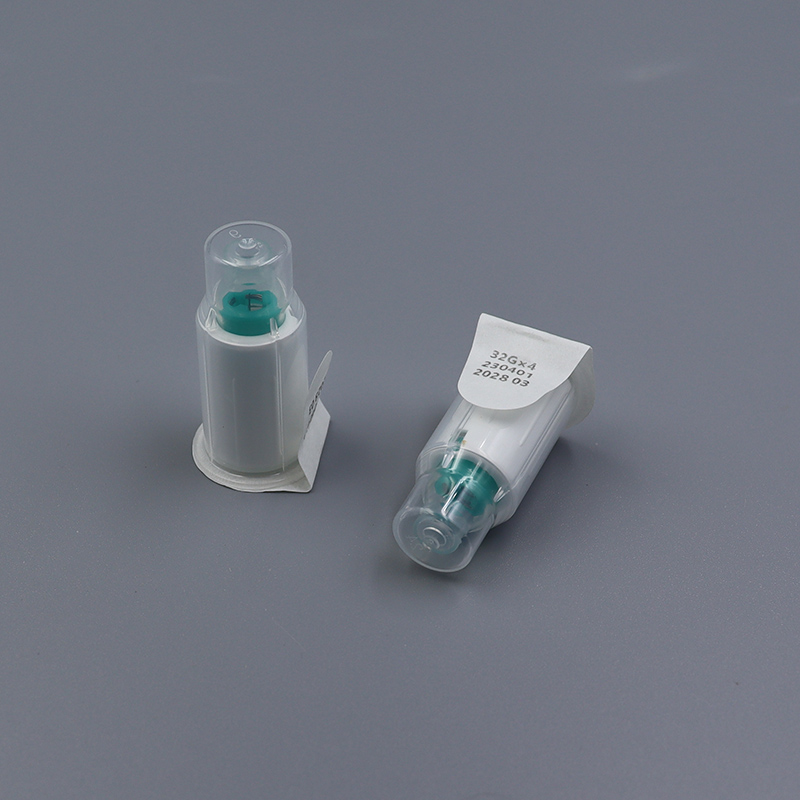
Universal Compatible Pen Needles
Most modern insulin pen needles are compatible with major insulin pen brands, simplifying procurement decisions for distributors and healthcare providers.
Universal compatibility improves supply chain efficiency and reduces inventory complexity.
Insulin Pen Needle Sizes: Length and Gauge Comparison
Choosing the correct insulin pen needle length and gauge is essential for ensuring insulin is delivered into subcutaneous tissue safely and comfortably.
Common Insulin Pen Needle Sizes Table
| Needle Length | Gauge Options | Typical Users | Clinical Advantages |
| 4mm | 32G / 33G | Children, elderly, lean adults | Lowest pain risk |
| 5mm | 31G / 32G | Most adult patients | Balanced comfort and control |
| 6mm | 31G | General adult population | Traditional standard |
| 8mm | 29G / 31G | Overweight patients | Deeper subcutaneous reach |
Modern diabetes injection guidelines increasingly recommend shorter needles because they reduce the risk of intramuscular injection and improve injection confidence.
Understanding Needle Gauge
An important rule when selecting insulin pen needle sizes:
The higher the gauge number, the thinner the needle.
Example:
| Gauge | Thickness Level |
| 33G | Ultra-thin |
| 32G | Very thin |
| 31G | Standard thin |
| 29G | Slightly thicker |
Thinner needles typically provide improved patient comfort and better treatment adherence.
How to Choose the Right Insulin Pen Needle
Selecting the appropriate insulin pen needle depends on multiple clinical and user-experience considerations.
1. Consider Patient Body Type
Shorter needles such as 4mm insulin pen needle length options are suitable for most patients regardless of age or BMI.
Longer needles may be recommended when:
subcutaneous tissue thickness is greater
injection angle adjustment is required
clinical guidance suggests deeper penetration
Choosing needle length, injection technique and site
| AGE | BMI | NEEDLE LENGTH | |
| Without skin fold, straight injection |
With skin fold, angled or straight injection |
||
| Children < 12 Very Slim Adults |
All | 4mm, 5mm, 6mm | 6mm |
| Teenagers (12-18 years) | Average | 4mm, 5mm, 6mm | 8mm |
| Overweight (BMI>25) | 4mm, 5mm, 6mm | 8mm, 10mm | |
| Adults | Average | 4mm, 5mm, 6mm, 8mm | 8mm |
| Overweight (BMI>25) | 4mm, 5mm, 6mm, 8mm | 8mm, 10mm, 12mm | |
| Consult your healthcare professional for assistance in choosing the right needle length, injection technique and injection site. Recommended for people injecting large dosages or with limited dexterity /strength. |
|||
This visual helps healthcare professionals select the correct needle length based on:
injection site
patient body type
injection angle
2. Evaluate Injection Technique
Correct insulin delivery requires subcutaneous injection rather than intramuscular injection.
Shorter needle options help:
reduce injection technique errors
improve dosing accuracy
minimize patient anxiety
enhance treatment consistency
Modern clinical recommendations often prioritize shorter needle designs for safer injections.
3. Select the Appropriate Gauge
Higher-gauge needles provide improved comfort during repeated injections.
Most commonly recommended options include:
32G disposable insulin pen needle
31G disposable insulin pen needle
These provide an ideal balance between strength and comfort.
4. Confirm Compatibility with Insulin Pen Devices
Before purchasing large volumes of insulin pen needles, compatibility should be verified with:
reusable insulin pens
disposable insulin pens
cartridge-based insulin delivery systems
Universal-fit insulin pen needles simplify procurement decisions for distributors and hospitals.
5. Consider Clinical Environment
Different healthcare settings require different needle specifications.
| Environment | Recommended Needle Type |
| Home care | 4mm 32G disposable insulin pen needle |
| Hospitals | Safety insulin pen needle |
| Elderly patients | Short-length ultra-thin needles |
| Pediatric care | 4mm insulin pen needle |
Selecting the correct configuration improves treatment safety and workflow efficiency.
Safety Tips for Using Insulin Pen Needles
Safe handling of insulin pen needle medical devices ensures reliable insulin therapy and prevents complications.
Always Use a New Needle for Each Injection
Reusing needles may cause:
infection risk
needle deformation
inaccurate insulin delivery
Single-use practice is strongly recommended for disposable insulin pen needles.
Never Share Insulin Pen Needles
Pen needles must never be shared between patients.
Sharing increases the risk of cross-infection even when the needle appears clean.
Rotate Injection Sites Regularly
Recommended injection areas include:
abdomen
thigh
upper arm
buttocks
Proper site rotation improves insulin absorption and prevents tissue damage.
Dispose of Needles Properly
Used needles should be discarded in approved sharps containers.
Using safety insulin pen needle products further reduces accidental injuries in professional healthcare environments.
Store Pen Needles Correctly
Proper storage helps maintain sterility and performance.
Recommended conditions include:
dry environment
sealed packaging
room-temperature storage
avoidance of direct sunlight
Correct storage ensures long-term reliability of insulin injection medical devices.
Final Thoughts
Choosing the correct insulin pen needle involves evaluating needle length, gauge size, compatibility, and safety requirements.
Shorter options such as 4mm and 5mm disposable insulin pen needles are increasingly recommended because they:
improve injection comfort
reduce dosing errors
lower intramuscular injection risk
enhance patient adherence
Meanwhile, safety insulin pen needle designs provide additional protection for healthcare workers in clinical environments.
For distributors, hospitals, and procurement specialists sourcing high-quality medical consumables, selecting appropriate insulin pen needle sizes plays a key role in improving diabetes treatment outcomes and ensuring safer insulin delivery worldwide.
Post time: Mar-30-2026