




In modern respiratory care, HME filters are essential components used to maintain airway humidity, reduce heat loss, and support infection control during mechanical ventilation. As widely used medical consumables, HME filters are commonly integrated into anesthesia systems, ICU ventilators, and emergency breathing circuits. This article explains what HME filters are, what they are used for, their main functions, and the different HME filter types based on patient categories.
What Are HME Filters?
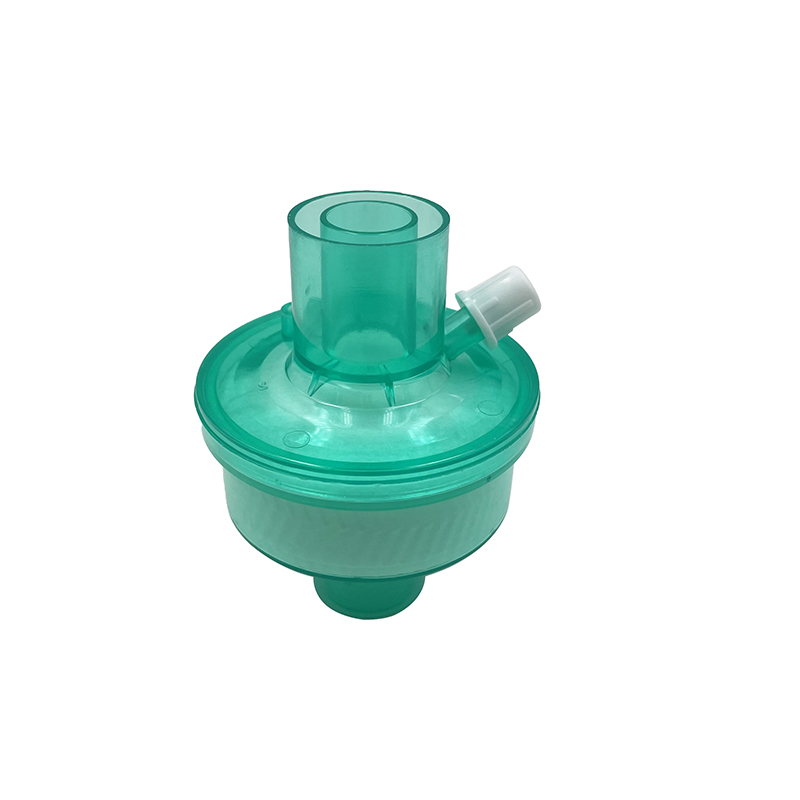
An HME Filter, or Heat and Moisture Exchange Filter, is a disposable medical device designed to capture heat and moisture from a patient’s exhaled air and return it during the next inhalation. This process simulates the natural humidification function of the upper airway, which is often by passed during intubation or tracheostomy.
HME filters are typically placed between the patient’s airway and the ventilator or anesthesia machine within a breathing circuit. Most HME filters are single-use products, making them a critical category of medical supplies and medical consumables in respiratory care.
What Is an HME Filter Used For?
HME filters are used to support patients who require assisted ventilation, including those undergoing surgery or receiving intensive care. Common applications include:
Mechanical ventilation in intensive care units (ICUs)
Anesthesia breathing circuits in operating rooms
Emergency and transport ventilation
Short- to medium-term respiratory support
By maintaining airway temperature and humidity, HME filters help prevent mucosal drying, thickened secretions, and airway irritation. Many modern HME filters also combine filtration functions, reducing bacterial and viral transmission within the breathing circuit.
Function of HME Filter
The function of an HME filter can be divided into three main roles:
Heat and Moisture Exchange
During exhalation, warm and humid air passes through the HME filter, where moisture and heat are retained. During inhalation, this stored heat and moisture are returned to the patient, improving comfort and airway protection.
Airway Protection
Proper humidification helps preserve mucociliary function, reduce secretion buildup, and lower the risk of airway obstruction during ventilation.
Bacterial and Viral Filtration
Many products are classified as HMEF (Heat and Moisture Exchange Filter), combining humidification with high-efficiency bacterial and viral filtration. This function is critical for infection control in hospitals and critical care environments.
HME Filter Types: Neonatal, Pediatric, and Adult HMEF
HME filters are designed in different specifications to meet the physiological needs of various patient groups. Based on patient size and ventilation requirements, HMEF products are commonly classified into neonatal HMEF, pediatric HMEF, and adult HMEF.
Neonatal HMEF
Neonatal HMEF is designed for newborns and premature infants with extremely low tidal volumes. These filters feature ultra-low dead space and minimal airflow resistance to avoid CO₂ rebreathing and respiratory strain. Neonatal HME filters are widely used in NICUs and neonatal transport systems.
Pediatric HMEF
Pediatric HMEF is intended for infants and children requiring respiratory support. It balances humidification efficiency with low resistance and moderate dead space, making it suitable for pediatric breathing circuits used in operating rooms and pediatric ICUs.
Adult HMEF
Adult HMEF is the most commonly used type in clinical practice. It supports larger tidal volumes and higher airflow rates while delivering effective heat and moisture exchange and high-level bacterial and viral filtration. Adult HME filters are widely used in ICUs, operating rooms, and emergency departments.
Comparison Table: Neonatal vs Pediatric vs Adult HMEF
| HME Filter | |||
| Neonatal HMEF | Pediatric HMEF | Adult HMEF | |
| Bacterial Filter Efficiency | >99.9% | >99.99% | >99.999% |
| Viral Filter Efficiency | >99.9% | >99.9% | >99.99% |
| Filtration Method | Electrostatic | Electrostatic | Electrostatic |
| Humidification (1-24 hrs) |
27.2mg/L @ 250mL Vt |
30.8mg/L @ 250mL Vt |
31.2mg/L @ 250mL Vt |
| Resistance (@15L/min) |
1.9cm H2O | 1.2cm H2O | |
| Resistance (@30L/min) |
4.5cm H2O | 3.1cm H2O | 1.8cm H2O |
| Dead Space | 15ml | 25ml | 66ml |
| Recommended Tidal Volume (mL) |
45mL – 250mL | 75mL – 600mL | 198mL – 1000mL |
| Weight | 9g | 25g | 41g |
| Sampling Port | Yes | Yes | Yes |
HME Filters in Breathing Circuits
In a standard breathing circuit, the HME filter is placed close to the patient, typically between the Y-piece and the airway interface. This position maximizes heat and moisture exchange while reducing contamination of ventilator tubing.
Compared with active humidification systems, HME filters offer advantages such as simple setup, no power requirement, lower cost, and reduced maintenance. These benefits make them widely used medical supplies in hospitals worldwide.
Importance of HME Filters in Medical Supplies Procurement
From a procurement perspective, HME filters are high-demand medical consumables due to their disposable nature and broad clinical use. Buyers and distributors typically evaluate HME filters based on filtration efficiency, moisture output, dead space, airflow resistance, and compatibility with breathing circuits.
Reliable HME filter suppliers play an important role in ensuring consistent quality and patient safety across different clinical environments.
Conclusion
HME filters are indispensable components in respiratory care, providing effective heat and moisture exchange while supporting infection control in breathing circuits. With specialized designs for neonatal, pediatric, and adult HMEF, these medical consumables meet the diverse needs of patients across all age groups.
Understanding HME filter functions, types, and applications helps healthcare providers and medical device buyers select appropriate medical supplies for safe and effective ventilation.
Post time: Jan-05-2026