




When sourcing disposable syringes from China, price is important, but it should not be the only factor. For importers, distributors, hospitals, and medical supply companies, product quality, certifications, production capacity, and delivery reliability all need to be considered.
China has many syringe manufacturers and medical device factories, but their production capabilities and quality systems can vary. Before placing a bulk order, buyers should check the manufacturer's documents, inspect samples, and clearly define quality requirements.
This guide covers the main points B2B buyers should check when sourcing disposable syringes and other medical syringes from a Chinese supplier.
1. Verify the Manufacturer's Certifications
Before discussing price and placing an order, first confirm that the supplier is a legitimate medical device manufacturer and that its certifications cover the products you plan to buy.
Do not only check whether a certificate is available. Check the company name, certificate scope, validity period, and manufacturing site to make sure the documents belong to the actual syringe factory.
Common Certifications to Check
- ISO 13485: Confirms that the manufacturer operates a quality management system for medical devices. Check whether the scope covers syringes or the relevant product category.
- CE Marking: Important for products sold in European markets. Buyers should check the applicable EU requirements and supporting documentation.
- FDA Information: For the US market, verify the manufacturer's FDA registration and whether the specific product requires 510(k) clearance.
- NMPA: Chinese medical device manufacturers may need the relevant registration and production licenses under China's medical device regulations.
| What to Check | Why It Matters |
| Company name | Confirms the documents belong to the actual supplier |
| Certificate scope | Shows whether the products are covered |
| Validity | Confirms the certificate is current |
| Manufacturing site | Helps verify the actual production location |
| Product information | Ensures documents match the offered syringe |
A reliable syringe manufacturer should be able to provide clear and consistent documentation before you place a large order.
2. Check Materials and Product Design
The materials used in a medical syringe affect its strength, appearance, usability, and overall consistency.
Disposable syringe barrels and plungers are commonly made from medical-grade plastic materials. Buyers should ask about the materials used and request product specifications when necessary.
Several details deserve particular attention:
Barrel material: The barrel should have good transparency and sufficient strength. Clear material also makes the graduation markings and liquid level easier to see.
Plunger movement: The plunger should move smoothly without excessive resistance or sudden sticking.
Gasket or stopper: The gasket should provide a reliable seal while allowing smooth plunger movement. Latex-free materials may be preferred for certain applications.
Graduation markings: The scale should be clear, accurate, and easy to read. Poor printing or unclear markings can affect dosage measurement.
For bulk orders, it is better to confirm these requirements during the quotation and sample stage rather than after production begins.
3. Evaluate Disposable Syringe Samples
A product sample gives buyers a practical way to evaluate the manufacturer's production quality before committing to a large order.
Ideally, the sample should come from the same production line or factory that will manufacture the final order. Buyers can inspect the following points:
| Quality Item | What to Check |
| Barrel | Clear, smooth, and free from visible defects |
| Plunger | Smooth movement and proper fit |
| Graduation | Clear and easy to read |
| Gasket | Good sealing performance |
| Nozzle | Correct size and secure connection |
| Appearance | No cracks, deformation, or visible contamination |
| Packaging | Properly sealed and undamaged |
Common performance checks include leakage, plunger movement, graduation accuracy, connector fit, and dead space where applicable.
For larger projects, buyers can also arrange independent laboratory testing based on applicable standards, such as ISO 7886-1 for sterile single-use hypodermic syringes.
The main point is simple: the sample should represent the quality that the factory can consistently deliver in mass production.
4. Review the Sterilization Process
Sterilization is an important part of disposable syringe production because the product may be supplied as a sterile medical device.
Many syringe factories use ethylene oxide (EO) sterilization, although other methods may be used depending on the product and manufacturing process.
When evaluating a supplier, ask:
- Is sterilization performed in-house or by an external provider?
- What sterilization method is used?
- Are sterilization records available for each batch?
- How are sterilization parameters controlled?
- If EO is used, how are EO residual levels tested?
A professional syringe manufacturer should have a documented sterilization and batch-release process. Buyers should also confirm that the supplier can provide the required sterilization records and test reports.
5. Inspect Packaging and Labeling
Even when the syringe itself meets the required specifications, poor packaging can cause problems during transportation and storage.
Disposable syringes are commonly individually packed in a sterile barrier package, such as a blister or medical-grade PE bag. The package should remain properly sealed and undamaged.
Main Packaging Areas
Primary packaging: Check the seal, material, labeling, and overall integrity. There should be no visible holes or open seals.
Inner box: The box should provide enough protection to prevent the syringes from being crushed or damaged during handling.
Master carton: For international shipments, cartons should be strong enough for warehouse and transportation conditions. Product name, quantity, batch number, manufacturing date, and expiration information should be clearly marked where applicable.
Packaging specifications should be agreed before production, especially for private-label or OEM orders.
6. Arrange a Pre-Shipment Inspection
For a large order, a pre-shipment inspection can help identify quality problems before the goods leave the factory.
The inspection can be carried out by your own quality team or an independent inspection company in China.
A typical inspection includes:
- Checking the total quantity
- Selecting random cartons
- Inspecting product appearance
- Checking product specifications
- Testing basic functions
- Inspecting packaging and labels
- Recording defects
- Preparing a final inspection report
Sampling can be based on an agreed AQL level or an applicable inspection standard such as ISO 2859-1.
Common Defect Categories
| Defect Level | Examples |
| Critical | Damaged sterile packaging, serious leakage, missing essential components |
| Major | Incorrect specifications, poor plunger movement, unclear graduation |
| Minor | Small cosmetic or outer packaging defects |
The acceptable quality level should be agreed with the syringe manufacturer before production starts. This gives both the buyer and supplier a clear reference during final inspection.
Choosing a Reliable Syringe Manufacturer in China
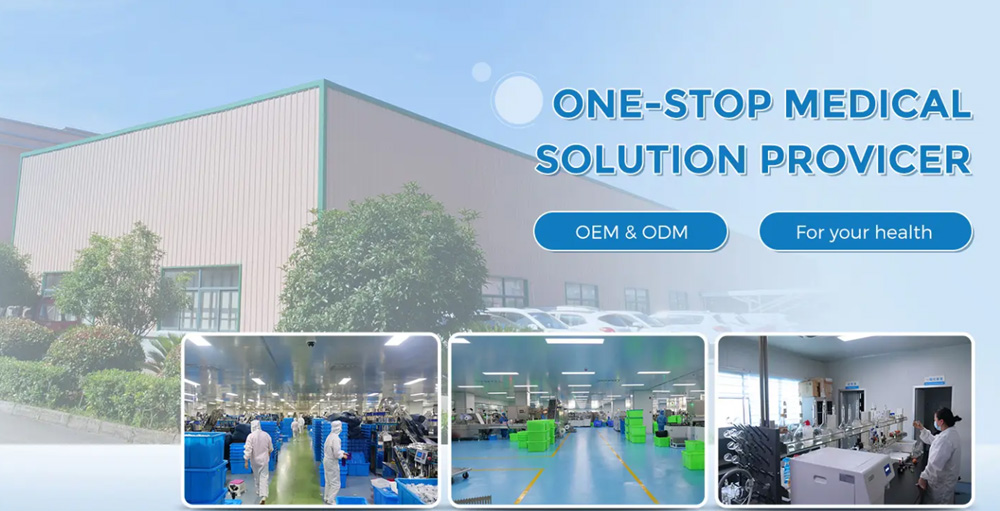
Finding a reliable syringe manufacturer in China is not simply about getting the lowest quotation. For importers, distributors, and medical supply companies, the right supplier should be able to provide consistent product quality, clear documentation, stable production, and reliable communication.
When comparing a syringe factory, buyers should look beyond the product catalog. Check the manufacturer's experience, production capabilities, quality control system, available syringe types, certifications, packaging options, and ability to handle OEM or ODM requirements.
Shanghai Teamstand Corporation is a China-based medical device manufacturer and exporter with more than 10 years of experience in healthcare supply. The company supplies disposable syringes and a wide range of medical consumables for international B2B customers. Its disposable syringe range includes different sizes and configurations, including 2-part and 3-part syringes, with Luer Slip or Luer Lock options. OEM and ODM services are also available for different syringe requirements.
For buyers looking for a long-term syringe supplier, Teamstand combines its own manufacturing resources with a wider network of partner manufacturers. This allows customers to source different medical consumables through one supplier rather than managing multiple factories for every product category. The company states that it has supplied customers in more than 120 countries and works with a network of over 100 partner manufacturers.
Before placing a bulk order, buyers can request samples, product specifications, certificates, packaging details, and production information. It is also worth discussing quality requirements and inspection standards with the supplier before mass production begins.
A good syringe manufacturer should not only offer a competitive price. More importantly, it should be able to deliver the same product quality from one order to the next and provide the support needed for long-term B2B cooperation.
Final Checklist for B2B Syringe Buyers
Before placing a large order with a syringe manufacturer or factory, check the following:
- Manufacturer and factory information
- ISO 13485 and other relevant certifications
- Product specifications and materials
- Disposable syringe samples
- Barrel, plunger, gasket, and graduation quality
- Sterilization process and records
- Individual and shipping packaging
- Labeling and carton requirements
- Pre-shipment inspection
- AQL or other agreed quality standards
A low price may look attractive at the beginning, but consistent quality is more important for a long-term medical supply business.
By checking the manufacturer carefully, testing samples, and setting clear quality requirements before production, B2B buyers can reduce purchasing risks and build a more reliable supply chain for disposable syringes and other medical consumables.
You should verify ISO 13485 (Quality Management), CE Marking (MDR 2017/745 for Europe), US FDA 510(k) clearance (for the US), and NMPA licenses (for domestic production in China).
Cross-check the certificate numbers directly on official databases (e.g., FDA or Notified Body registries) and ensure the manufacturing facility's name matches the certificate holder rather than a third-party trading company.
ISO 7886-1 is the primary international standard used to evaluate physical, mechanical, and operational quality requirements for sterile single-use hypodermic syringes.
Essential tests include liquid and air leakage testing under pressure, plunger movement smoothness, scale graduation ink durability, and residual dead space volume measurement.
Ethylene Oxide (EO) gas is the standard sterilization method; you must verify batch release records and ensure EO residual levels stay below $\le 10 \, \mu\text{g/g}$ to prevent chemical toxicity.
Pre-shipment inspections typically follow ANSI/ASQ Z1.4 (ISO 2859-1) with standard Acceptable Quality Limits (AQL) set at 0.0 for Critical Defects, 1.0–1.5 for Major Defects, and 2.5–4.0 for Minor Defects.
WANT TO WORK WITH US?

Author: EMMA
Marketing Manager
Hello, I'm Emma, serving as the Marketing Manager at Shanghai Teamstand Corporation. With over 10 years' experience in the medical industry. Our dedicated team is eager to offer you good service and high quality products with competitive price.
Mob: (00)86-18621901943
Email: sales@teamstandmed.com
Post time: Oct-08-2026