




For patients undergoing hemodialysis, choosing the right dialysis needle is essential for ensuring safe, comfortable, and efficient treatment. Among the available dialysis needle sizes, the 15G dialysis needle is one of the most widely used options in adult hemodialysis. It provides an excellent balance between blood flow performance and patient comfort, making it a preferred medical device in dialysis centers worldwide.
This article explains the benefits of a 15G dialysis needle, the applications of a 15G dialysis needle, and the features that make it suitable for routine dialysis treatment.
What Is a Dialysis Needle?
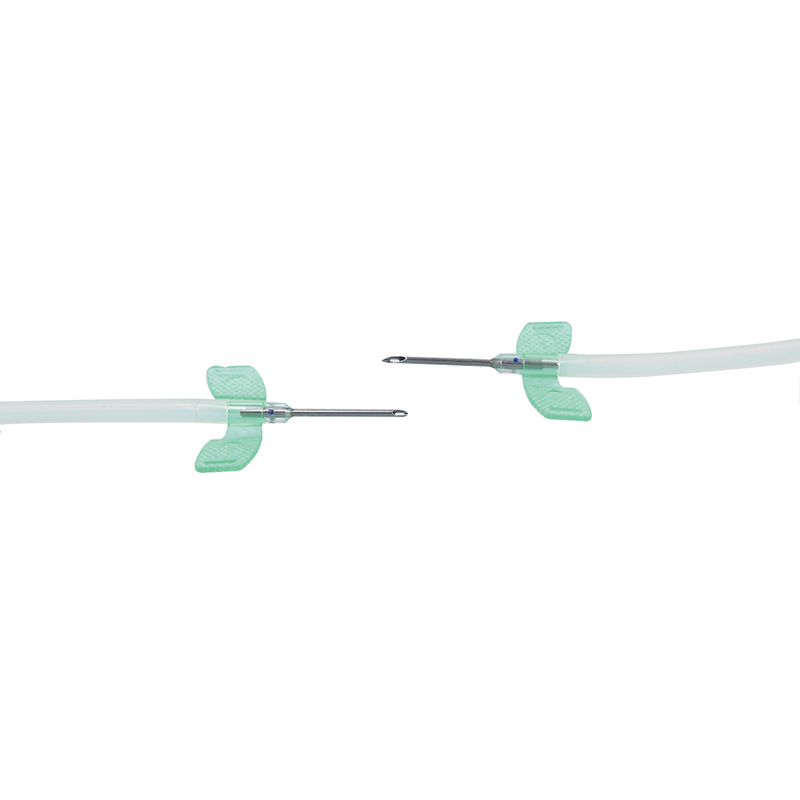
A dialysis needle is a specialized needle used to access a patient’s blood circulation during hemodialysis. It is typically inserted into an AV fistula needle site — either an arteriovenous fistula or graft. Every treatment requires two needles:
Arterial needle: draws blood from the patient
Venous needle: returns the blood after filtration
Dialysis needles vary by size, tip type, and design, but the 15G dialysis needle remains the standard choice for adult patients with mature vascular access.
Understanding Dialysis Needle Size (Gauge System)
In the gauge system, the smaller the gauge number, the larger the diameter. Proper needle size ensures stable blood flow and access site protection.
Table 1. Common Dialysis Needle Sizes and Their Typical Use
| Dialysis Needle Size | Outer Diameter | Typical Flow Rate | Common Use Case |
| 14G | Largest | 350–450 mL/min | High-efficiency dialysis, large fistulas |
| 15G | Medium-large | 300–400 mL/min | Standard adult dialysis |
| 16G | Medium | 250–320 mL/min | New or sensitive fistulas |
| 17G | Smallest | 200–250 mL/min | Pediatric or early-stage fistulas |
The 15G option strikes the ideal balance between comfort and performance.
Key Benefits of a 15G Dialysis Needle
1. High Blood Flow for Better Dialysis Efficiency
A major benefit of a 15G dialysis needle is its ability to achieve optimal blood flow rates, often up to 400 mL/min, allowing:
better toxin removal,
shorter treatment times,
improved dialysis adequacy (Kt/V).
2. Comfortable for Long-Term Use
The 15G size is large enough for stable flow but small enough to minimize cannulation pain and reduce stress on the vascular access. This balance is especially important for long-term hemodialysis patients.
3. Lower Risk of Access Complications
Consistent use of a properly sized AV fistula needle reduces the risk of:
Infiltration,
Hematoma,
Vessel trauma,
Prolonged bleeding.
4. Ideal for Mature AV Fistulas and Grafts
Most mature AV fistulas and grafts handle 15G needles comfortably, making them suitable for nearly all adult hemodialysis patients.
5. Compatible With Standard Adult Dialysis Protocols
Because most adult hemodialysis protocols require higher flow rates, the 15G needle becomes the universal, reliable choice for routine treatments.
Applications of a 15G Dialysis Needle
The application of a 15G dialysis needle depends on patient condition and treatment goals. Common clinical uses include:
1. Routine Adult Hemodialysis
Most adult dialysis patients with mature vascular access use 15G needles regularly.
2. High-Flux and High-Efficiency Dialysis
Higher blood flow is required for high-flux filters, making the 15G needle the preferred size.
3. Cannulation of Mature AV Fistulas
After a fistula matures (typically 6–12 weeks), clinicians often upgrade patients from 16G or 17G to 15G.
4. Cannulation of AV Grafts
Synthetic grafts support higher blood flow and are well-suited for 15G needle cannulation.
5. Long-Term Hemodialysis
Patients who require dialysis multiple times weekly benefit from stable, low-trauma cannulation with 15G needles.
Features of a High-Quality 15G Dialysis Needle
A reliable medical device for dialysis includes several design elements that enhance usability and patient comfort:
Table 2. Key Features of a 15G Dialysis Needle
| Feature | Description | Benefit |
| Silicone-coated cannula | Reduces friction during insertion | Less pain, smoother cannulation |
| Back-eye design | Additional hole near tip | Better blood flow, less turbulence |
| Flexible wings | Wing-shaped handle for grip | More precise needle control |
| Color-coded hub | Usually blue for 15G size | Easy size identification |
| Sharp bevel tip | Ultra-fine cutting surface | Minimizes vessel trauma |
| Safety mechanism (optional) | Clip or shield design | Prevents needle-stick injuries |
These features contribute to safer, more efficient hemodialysis sessions.
Choosing the Right Dialysis Needle Size
When selecting a dialysis needle size, clinicians consider the following:
Table 3. How to Choose the Appropriate Needle Gauge
| Patient Condition | Recommended Needle Size | Reason |
| New or fragile AV fistula | 16G–17G | Minimizes trauma during early use |
| Mature fistula | 15G | Ideal flow rate and comfort |
| High-flow fistula or graft | 14G–15G | Supports high-efficiency dialysis |
| Pediatric or low-weight patient | 17G | Safer for smaller vessels |
The 15G needle is appropriate for the majority of adult patients.
Why Dialysis Centers Prefer 15G Needles
Dialysis centers often choose the 15G size because it offers:
Consistent high blood flow,
Comfortable insertion for long-term use,
Compatibility with high-flux dialysis,
Reduced complication rates,
Improved overall treatment efficiency.
For buyers and medical suppliers, 15G needles are the most commonly purchased dialysis needle specification.
Conclusion
The 15G dialysis needle is a crucial tool in modern hemodialysis, providing optimal blood flow, patient comfort, and vascular access protection. Understanding the benefits of 15G dialysis needles and the applications of 15G dialysis needles helps clinicians and medical product buyers choose the best medical device for safe and effective hemodialysis treatment.
Post time: Dec-01-2025